0:00
Good morning guys, Tony Maritato here, licensed physical therapist, and I want to talk to you
0:04
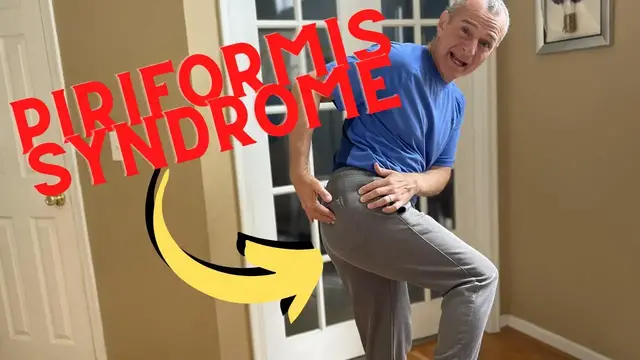
today about something called piriformis syndrome. Now I'm going to differentiate it a little bit
0:09
from sciatica because the piriformis is actually a muscle. It's a triangular shaped muscle that
0:15
runs across kind of where your back pocket would be on a pair of jeans. So that muscle goes from
0:21
the sacrum out to the point of the femur. It is involved in the motion that rotates the leg
0:28
externally there's some other actions that it's involved in but to keep it simple just think about
0:34
the muscle that causes you to turn your toe out through the leg so that piriformis muscle in about
0:40
20 percent of the population the sciatic nerve will actually run through the piriformis muscle
0:47
and if that muscle gets into spasm or is chronically sensitive it could affect the sciatic nerve the
0:53
sciatic nerve of course will cause radiating pain down the back of the leg the outside of the lower
1:00
leg all the way down into the foot or the ankle so the sciatic nerve could be flared up for multiple
1:06
reasons but when you have been diagnosed with piriformis syndrome specifically the primary
1:13
location is as i said right in that back pocket the primary muscle function is to rotate the leg
1:20
laterally point the toe away so one of my favorite exercises for patients that
1:25
are dealing with piriformis syndrome is to actually work the opposite muscle group so the way your body is designed is the brain is an amazing system When my brain tells one muscle in this case my bicep to tighten reflexively my brain tells my tricep to relax
1:43
So if I have a spasm or a cramp in my tricep muscle, I want to tighten my bicep. We're going
1:51
to apply that same strategy, it's called reciprocal inhibition, to the piriformis. So if I think that
1:56
piriformis muscle is in spasm or tight what i want to do is i want to work the opposite motion i want
2:02
to work internal rotation through the leg to activate the musculature the antagonist muscles
2:09
to the piriformis and typically what i do i hate to say this but i pretend that i'm putting out a
2:15
cigarette so i put the ball of my foot down on the ground i apply some pressure that produces friction
2:22
as I rotate and I'm rotating the foot in, I'm flaring the heel out. This is working internal
2:30
rotation through the femur, which is reflexively telling my central nervous system to inhibit the
2:37
piriformis muscle and relax it. I'll typically do an exercise like this 20 to 30 times, three to four
2:43
times a day. It's not something that's designed to try and increase strength or stretch the
2:49
piriformis muscle. It's simply a way to trick the nervous system into trying to relax a muscle that
2:56
we believe is increased in either tightness or spasticity. So guys, give that a try. If it helps
3:03
you, absolutely let me know. If not, connect with a local physical therapist for a more
3:07
comprehensive evaluation. I'll catch you on the next video